
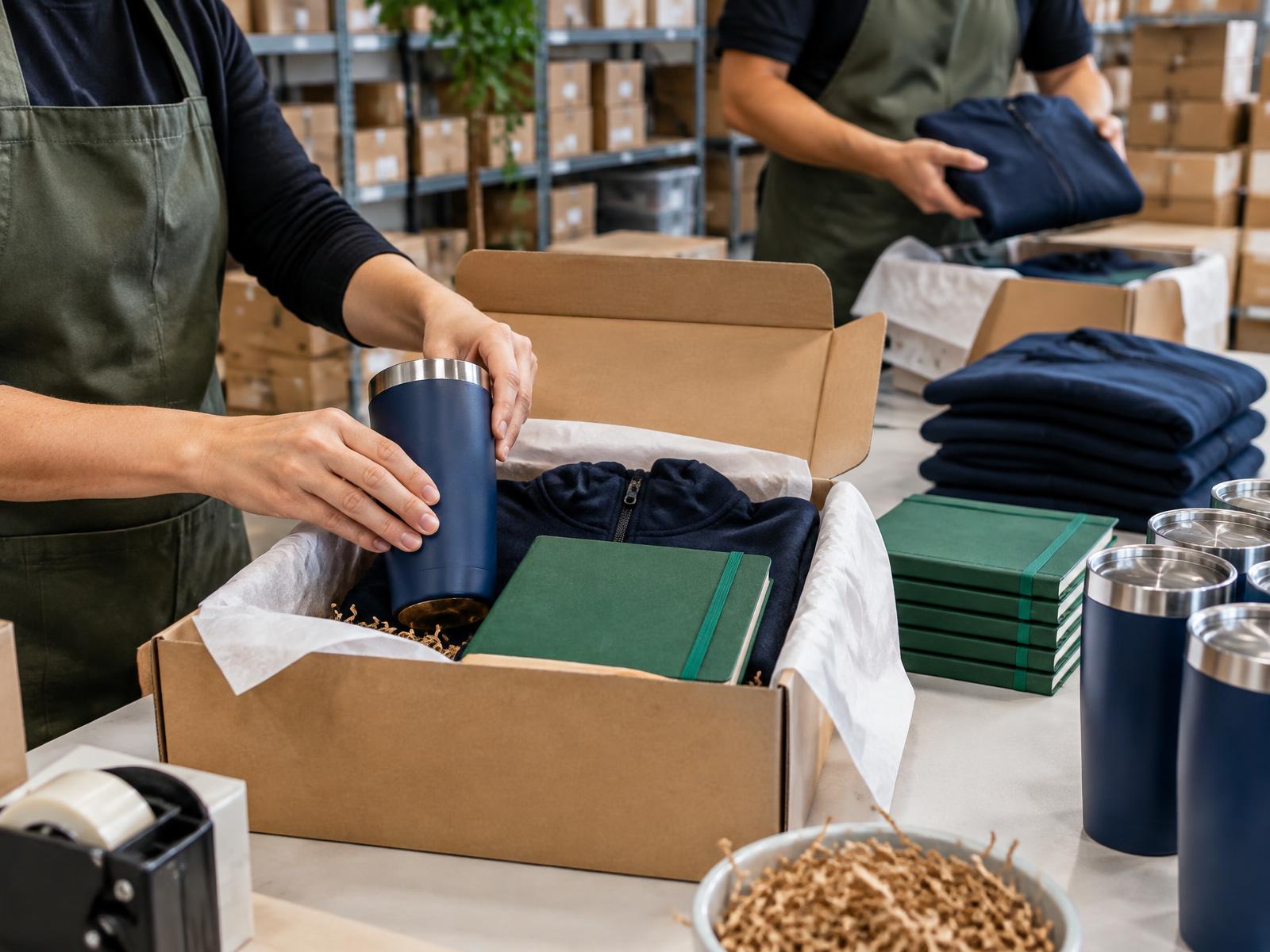
Core assortment by role
Define what each role wears, then allow a small set of options. Unlimited choice is the main driver of inconsistency and cost.
One ordering path
A company store or a single managed intake removes the email-and-quote cycle and creates visibility into spend.
Replenishment
Plan turnover, growth and wear. Replenishment cadence matters more than the initial rollout.
Standardizing a multi-location uniform program
- 1Define the required pieces per role, not a catalog of everything available
- 2Lock artwork files and placement centrally so no location recreates the logo
- 3Route every location through one ordering path — store, portal or single intake contact
- 4Set a replacement cycle per garment type based on how hard it's worn
- 5Build in headcount growth and turnover, not just steady-state replacement
Planning mistakes to avoid
Letting each location choose its own options
Open choice feels flexible but it's the fastest way to end up with inconsistent colors, logos and vendors across locations within a year.
Underestimating turnover
Initial rollout volume is the easy number. New hires and garment wear between rollouts is what actually drives ongoing uniform spend, and it's the number most budgets miss.
No single ordering path
If locations are emailing a rep or ordering off separate invoices, there's no real visibility into total uniform spend until someone goes looking for it after the fact.
Where Bagley changes the outcome
A narrow, well-defined assortment is almost always cheaper to produce and easier for us to keep in stock than an open one — fewer SKUs means better reorder turnaround when a location runs low. If you're not sure where to draw that line, tell us the roles and we'll suggest the assortment rather than starting from a blank catalog.
Common questions
- How many uniform options should each role actually have?
- Usually two or three variations (fit, weight, or short vs. long sleeve) is enough. More than that tends to fragment inventory and reorder efficiency without adding real value.
- Does a company store make sense for a smaller number of locations?
- It depends more on order frequency than location count. If locations are reordering regularly and independently, a managed store or single ordering path usually pays for itself quickly.
- How do you account for employee turnover in a uniform budget?
- Turnover adds full initial issues on top of normal replacement garments. Our uniform budget calculator separates those two numbers so neither gets missed.