The problem we usually walk into
A welcome kit becomes difficult to repeat when sizes, hiring dates, role needs and shipping addresses arrive separately. Extra items do not fix a missing uniform piece or a kit that reaches a new hire after the first day.
How we approach it
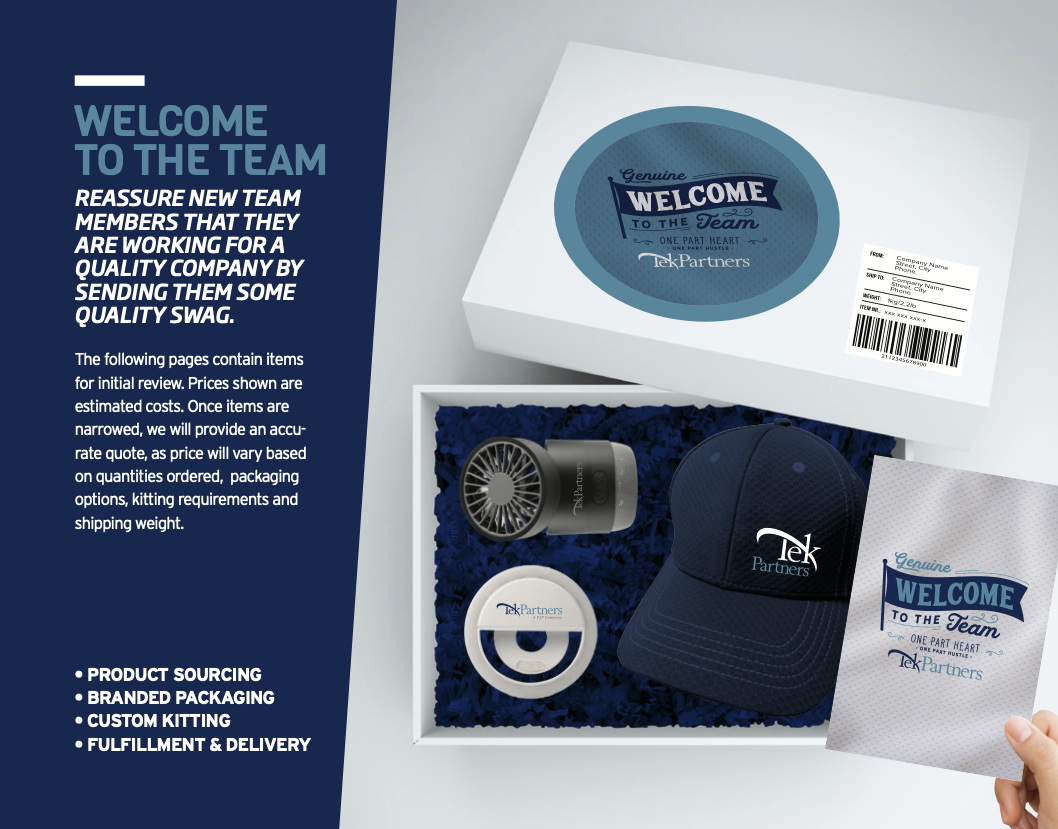
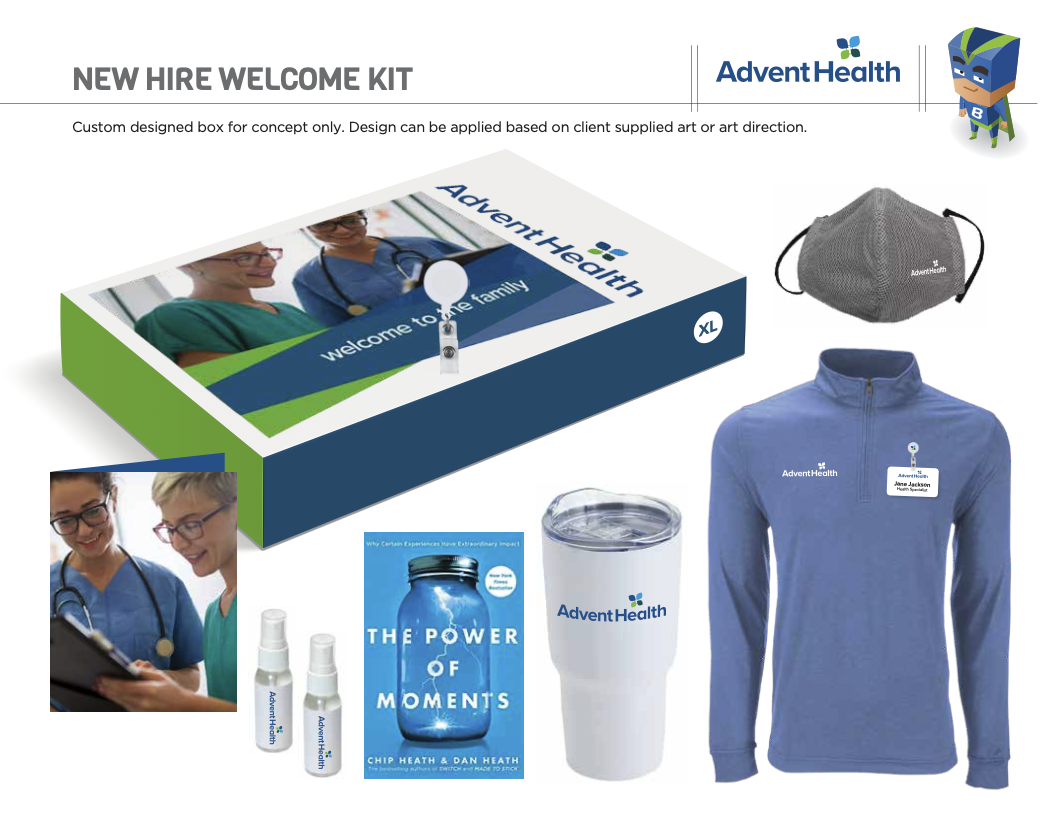
- 01Start with 1–2 useful branded apparel or uniform pieces appropriate to the employee's role and workplace requirements.
- 02Add a few practical branded products and welcome/onboarding materials; prioritize usefulness rather than filler.
- 03Plan size mixes, quantities and release cadence by role and location, with room for changing hiring needs.
- 04Have Bagley coordinate branded packaging, welcome messaging, kitting and delivery to locations or directly to employees.
- 05Review inventory and replenishment; add a company store only when recurring demand and ordering needs justify it.
A useful kit, not a box of extras
One or two role-appropriate apparel pieces, a few useful products and the materials a new hire needs are a practical starting structure. Department requirements, sizing, budget and work setting change the contents. Bagley curates the assortment and branded presentation around those needs; the Welcome Kit Builder helps organize your initial brief.
Plan sizes and quantities by role
Separate clinical, support, office and field-team requirements. Confirm size collection, initial garment quantities, hiring cadence and location counts before purchasing. The Uniform Budget Calculator helps model quantity and replacement needs using your own garment-cost input; Bagley confirms actual products, decoration and pricing.
Delivery follows the start date
Bulk kits can go to designated location contacts; remote hires may need individual shipping. Share start dates, receiving windows, shipping addresses and kit-label instructions early. Bagley can assemble kits, hold inventory where appropriate and schedule releases, with stock and delivery commitments confirmed during review.
Replenishment without restarting the program
Recurring hiring may justify a core inventory pool, a managed reorder process or an approved company-store assortment. Frequency, size variability and who orders or pays determine the best model. Use the Company Store Planner before committing to a store; Bagley can review replenishment and fulfillment alongside the kit program.
Common questions
- How many apparel pieces belong in a welcome kit?
- Start with 1–2 useful branded apparel or uniform pieces appropriate to the role, then adjust for workplace requirements, sizing and budget. A few practical products and welcome materials are usually more useful than filler; Bagley confirms the assortment.
- Can Bagley ship kits directly to new employees?
- Yes. Direct-to-employee fulfillment requires recipient addresses and delivery windows. Bagley can also kit and label for locations, with inventory and release arrangements confirmed for your hiring cadence.
- Does every onboarding program need a company store?
- No. A managed kit-release or reorder process may be enough. Recurring demand, role and size variation, ordering responsibility and payment rules determine whether a store adds value.